Death Doulas Help You Live Well by Facing Your Own Mortality
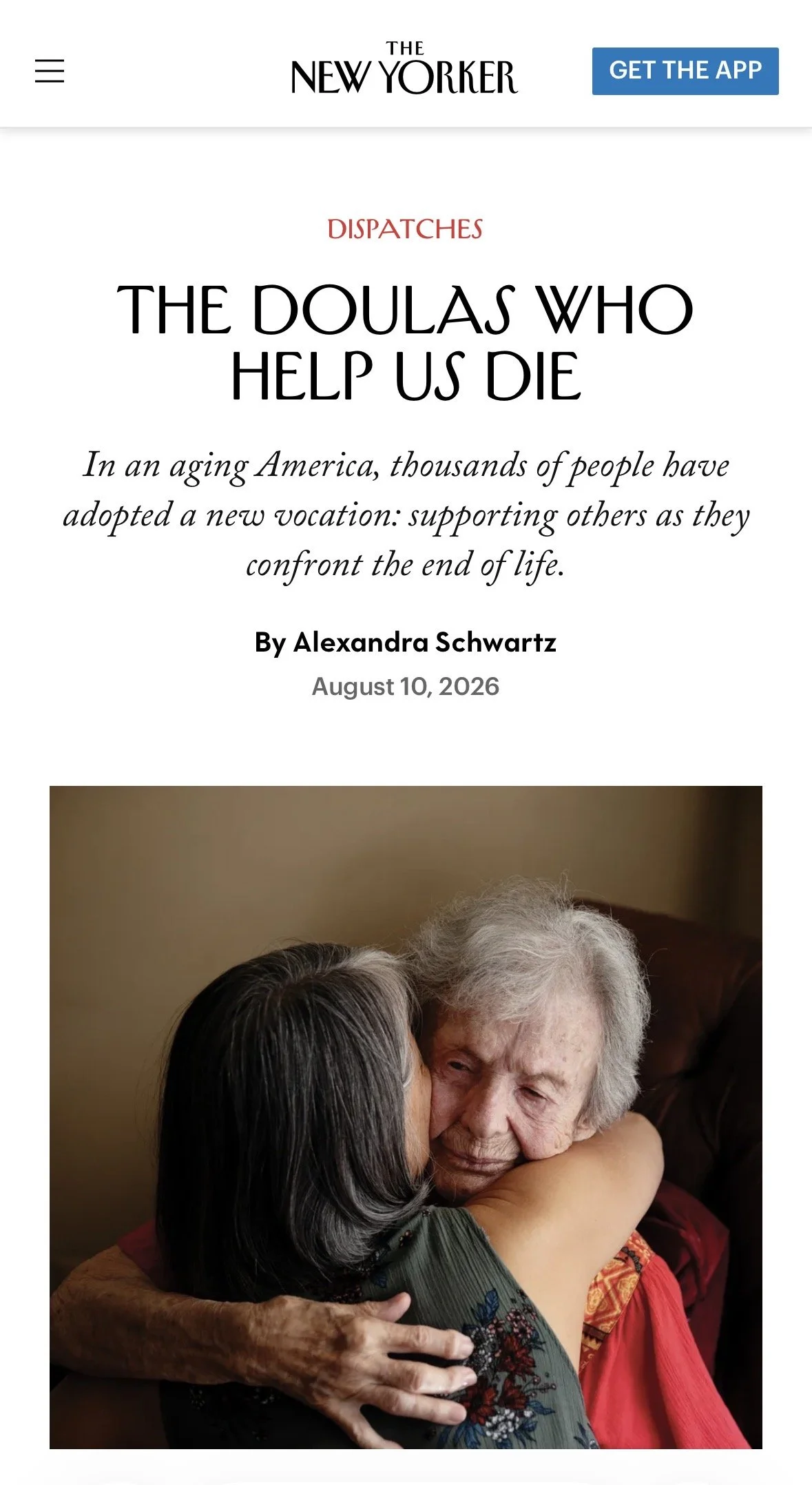
Virginia Chang with one of her clients, the hundred-and-one-year-old Eleanor. Photograph by Lauren Lancaster for The New Yorker
The term "death doula" has been getting unusual attention lately — partly thanks to Nicole Kidman and Chloe Zhao both announcing plans to train in the field, and partly because of standout end-of-life doula characters on shows like The Pitt and Dying for Sex. I even had Hospice Austin reach out recently, asking me to share with their staff more about what this work actually involves. Around the same time, The New Yorker ran a strong feature exploring how the field is growing, what doulas actually do, and why interest is surging now.
The piece points to real numbers behind the trend: the International End-of-Life Doula Association (INELDA) says it has trained roughly 10,000 doulas over the past decade — and that's just one organization in a field now crowded with training programs.
What the article gets right is that this isn't a sudden phenomenon. It traces roots back more than fifty years, citing sociologist Lyn H. Lofland's 1978 book The Craft of Dying, which argued that modern medicine's ability to extend life also stretches out the dying process itself. The catch, according to INELDA co-founder Henry Fersko-Weiss, is that our culture hasn't kept pace emotionally — we remain so uncomfortable with mortality that a terminal diagnosis tends to catch people off guard, leaving them clinging to hope rather than preparing for what's ahead.
That's the gap death doulas fill: the widening space between medicine's power to prolong life and the emotional, spiritual work of actually reckoning with our own mortality.
The part of the article that resonated most with me is something I see constantly in my own practice — that facing mortality head-on is increasingly viewed as part of living well, not just something reserved for crisis. Georgia-based doula Darnell Lamont Walker described it this way: more and more of his clients aren't dying or in danger at all — they simply want help thinking through how they want the rest of their life to go.
